

In this article, Counselling Psychologist Dr Tshepiso Matentjie explores how nurturing a harmonious family life takes effort and respect. She explains that being a parent isn’t about perfection but about love and connection, offering practical ways to build a strong bond with your child.
Homeschooling in South Africa offers a unique opportunity to be deeply involved in your child’s education. However, the dual roles of parent and teacher can sometimes blur, creating unique challenges for homeschooling family dynamics. The key is to intentionally work to strengthen the parent-child relationship while homeschooling.
Nurturing this bond takes effort, mutual respect, and unconditional love. It is not about doing everything perfectly, but about showing your children you love them through your actions and being present for them. Here are ten practical ways to build a stronger connection with your child amidst the demands of home education.
1. Show Love Through Words and Actions
Telling your children you love them every day, regardless of their age, is fundamental. After a disagreement, it is important to let them know that while you disliked their behaviour, you love them unconditionally. Beyond words, gentle physical contact like hugs is needed for healthy emotional development.
Every interaction is a chance to connect. Greet them with a smile, make eye contact, and encourage honest conversation. Understanding your child’s primary “love language”—be it words of affirmation, acts of service, receiving gifts, quality time, or physical touch—can help you express your love in the way they best receive it.
2. Schedule Quality One-on-One Time
Spending quality time together on an activity you all enjoy is a great way to connect. This investment in your relationship helps children cope better with stressful situations later in life. In a homeschooling context, it is helpful to schedule time that is separate from “school time.”
This could be a weekly date with each child, a family game night, or even starting a family project together. The goal is to create positive memories that are not tied to academic performance. This dedicated time reinforces your role as a parent first and teacher second.
3. Eat Meals Together as a Family for a Strong Parent-Child Relationship
Sharing at least one meal together each day provides a natural opportunity for connection. Mealtimes are perfect for talking about the day, discussing interests, and sharing challenges or happy moments. This tradition is a cornerstone of building strong family bonds and strengthens your parent-child relationship.
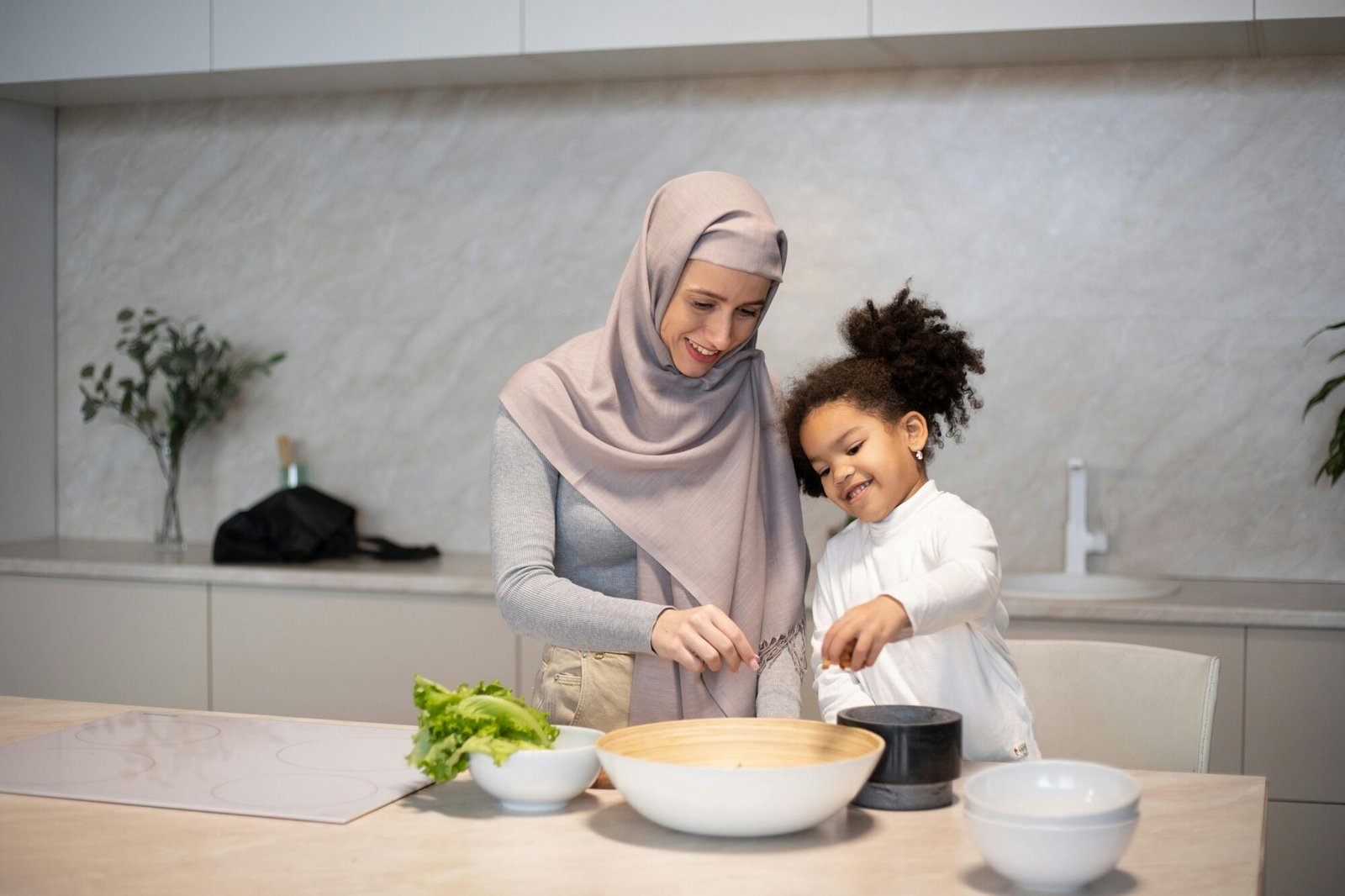
Involve children in the process of preparing the meal and clearing up afterwards. This not only offers more time for conversation but also teaches the value of working together as a family unit.
4. Prioritise Distraction-Free Availability
When your child wants to talk, it is important to be fully present. Turn off the TV, and put away your phone and other devices. Setting aside this distraction-free time shows your child that they are a priority over any other stressor you are facing.
According to UNICEF, responsive parenting, which includes being attentive and engaged, is critical for a child’s brain development. This focused attention makes your child feel seen and heard, which is essential for a secure parent-child relationship.
5. Practice Open and Honest Communication to Strengthen the Parent-Child Relationship
Communication is a critical part of any strong parent-child relationship. Whether you are discussing behaviour or just asking about their day, it is important that you and your partner are ready to have these conversations.
Practice active listening by giving your child space to share without interruption. Instead of immediately offering solutions, try asking open-ended questions to understand their perspective. This creates a safe environment where they feel comfortable sharing their thoughts and feelings.
6. Use Words of Encouragement
The words you use every day can build your parent-child relationship while homeschooling. If you hold the belief that children should be “seen and not heard,” you miss out on understanding their developing minds and thoughts.
Focus on praising effort rather than just results. For example, instead of saying, “You’re so smart,” try, “I saw how hard you worked to solve that maths problem.” These words of affirmation build resilience and self-worth.
7. Let Your Children Help You
Parents can miss opportunities for connection by not letting their children help with daily tasks. Involving them in chores like unloading groceries gives them a sense of competence and value.
In the homeschool setting, this can extend to academic life. Ask for their input on a project or let them help plan a fun Friday activity. When you ask for their opinion, it shows you value their perspective, though you may have to accept their choice!
8. Clear Boundaries and Rules Underpins a Healthy Parent-Child Relationship
Children need structure and guidance to learn about the world. It is important to talk to them about your expectations so they understand them clearly. This is especially important in a homeschooling environment where the lines between home and school can blur.
When rules are broken, apply consistent and age-appropriate consequences. As the Child Mind Institute notes, clear limits help children feel safe and secure. These boundaries are an expression of your care and help maintain a respectful home environment.
9. Respect Their Choices and Independence
Children strive for independence from a young age. Respecting their choices, even if you disagree with their mismatched outfit or room decor, is important for their development. Supporting their decisions helps them develop their own identity.
Allowing your child to make small choices gives them a sense of control and shows that you trust their judgment. It is okay if they wear a striped shirt with plaid shorts to the shops; this is a small price for fostering their decision-making skills.
10. Check In with Each Other Daily
A quick daily check-in can be one of the most effective ways to strengthen your bond. This does not need to be a long conversation; a few minutes of one-on-one time is enough. When it comes to connecting with your child, frequency is more important than duration.
Ask open-ended questions like, “How was your day?” or “Did anything not go as you planned?”. This simple ritual allows both of you to share experiences without judgment and reinforces your connection.
11. How Strong is Your Parent-Child Relationship?
Which of these tips do you find most helpful? Share your own strategies for strengthening your parent-child relationship while homeschooling in the comments below! Don’t forget to subscribe to our weekly newsletter for more insights on positive parenting in South Africa.