

Find out more about a recent Cambridge report that highlights the most critical Future-Ready Skills for learners today - digital literacy and self-management are two key skills that stand out for the homeschooled learner. Discover practical strategies and digital learning resources to prepare your child for a rapidly changing world.
As South African families prepare for a new school year, the question isn’t just “Are we ready with our stationery and textbooks?” but “Are we ready for the future … for a rapidly changing world?” A recent report published by Cambridge – Navigating the Future: Preparing learners to thrive in a changing world – highlights the skills and attitudes that matter most for learners today, and tomorrow, and offers powerful insights for homeschoolers.
The Skills That Matter Most
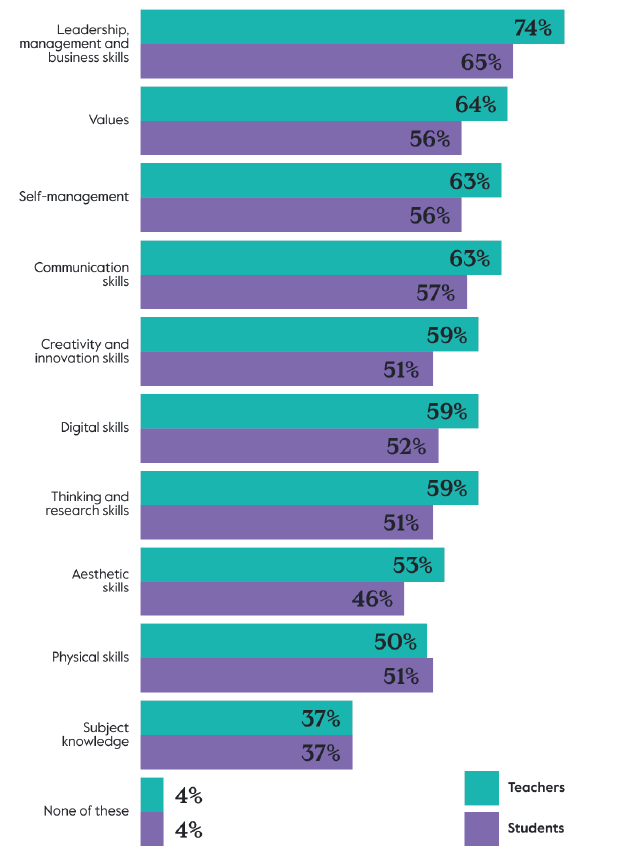
The report, based on feedback from thousands of teachers and students worldwide, identifies digital literacy and self-management as critical for future success. These skills go beyond subject knowledge – helping learners adapt, think critically and thrive in uncertainty.
“Self-management – a set of skills that enable students to recognise and manage their thoughts, feelings and actions – deserves particular emphasis in preparing students to thrive in a changing world.”
Teachers and students agree: digital skills and self-management are essential, but also challenging to teach and learn. Nearly a quarter of teachers surveyed said self-management skills are the hardest to teach, while almost 20% of students found them the hardest to learn.
“It’s incredible to see that teachers and students are recognising the importance of thinking and research skills and self-management skills. This is what research shows is important based on the science of learning, so it’s great to see this also being recognised by students and teachers themselves.” – Professor Sara Baker, Professor of Development Psychology and Education, University of Cambridge.
Why Digital Literacy is Essential
Digital literacy isn’t just about using devices – it’s about finding, evaluating and applying information wisely, and includes understanding the scope and limitations of AI. The report notes: “A quarter of students say that the greatest benefit of technology was its application in finding and understanding information.” Integrating AI prepares learners to interact with emerging technologies and harness digital tools that will shape future workplaces.
Says Group Managing Director of International Education, Rod Smith: “Technology and AI can make information more accessible than ever, but without the subject knowledge and critical thinking to evaluate and use that information wisely, young people risk being overwhelmed or even disempowered.”
Technology also brings challenges: distraction, shortened attention spans, and over-reliance on quick answers. As one student shared: “People are used to getting quick information, so they lack the patience to concentrate for longer than one minute to get the information they want.” Homeschooling parents can help by teaching children to use digital tools thoughtfully, balancing screen time with deep learning.
It is important in the homeschooling environment to create opportunities for students to strengthen executive functioning skills, particularly attention, focus and emotional control. Parents and tutors play an important role in setting boundaries for device use, and ensuring consistent habits across home and learning environments.
To explore recommended key principles and practical strategies, see the Cambridge Getting Started With AI in the Classroom guide here.
Building Self-Management at Home for Future-Ready Skills
“Self-management and leadership can only be developed if students have real opportunities to experience them. That means adults sometimes giving up control… to allow young people to be exposed more often to situations in which those abilities are required.” – Alex Beard, Senior Director, Global Learning Lab at Teach for All.
Self-management in homeschooling includes discipline, motivation and strategic planning – skills vital for independent study and lifelong learning. It includes the abilities to manage uncertainty, apply healthy personal coping mechanisms, and handle adaptability and flexibility. The report highlights practical strategies:
- Setting boundaries for device use (e.g., timers, “do not disturb” mode)
- Creating as far as possible a space for learning that minimises distractions
- Incorporating learning activities that do not rely on technology
- Using planners and checklists to organise study time
- Encouraging reflection and goal-setting
“An exercise I do with myself when I’m studying for an important exam and I need to be attentive. I close off all of my electronics, I put my phone on to “do not disturb” and I just put a one- or two-hour timer. This will basically help me to be attentive as I’m not focusing on any electronics at that time and I don’t have anything to distract me.” – Student, United Arab Emirates.
Students and teachers see self-management and digital skills as vital for students’ future after finishing their education.
Recommended Digital Learning Resources
To support digital literacy and self-management, consider these trusted platforms and partners:
Cambridge GO
Cambridge GO is the official platform for accessing Cambridge digital textbooks and resources – such as e-books, interactive materials and downloadable PDFs – for Cambridge IGCSE, AS and A Levels as well as locally published CAPS curriculum titles. Registration is free, and you can sign up as either a student or a teacher (parent) – once your resources are added to your profile, you can view them offline.
If you need answers for the Cambridge IGCSE, AS and A Levels Learner Books and Workbooks, find them under ‘Supporting Resources’. (Teacher’s Resource materials are not provided as downloadable PDFs. These support resources may be purchased and accessed on the Cambridge GO platform.) Explore: https://www.cambridge.org/go
How to use e-books – @CambridgeAfrica on YouTube
This channel offers practical video guides for African learners and teachers, including tutorials on using e-books, navigating Cambridge GO, and tips for digital learning resources.
Visit @CambridgeAfrica
Watch the How to use e-books playlist here.
Kelo & Snapplify
Both Kelo and Snapplify are leading partners in homeschooling in South Africa for digital textbooks and educational resources. They offer secure access to Cambridge and CAPS-aligned materials, e-books and downloadable PDFs for Grades R–12.
Kelo: https://kelobooks.com
Snapplify: https://snapplify.com
| Support anti-piracy to ensure your learners get the authentic Cambridge quality they deserve! Cambridge content, whether printed or digital, may not be copied, shared or distributed outside authorised digital platforms. |